
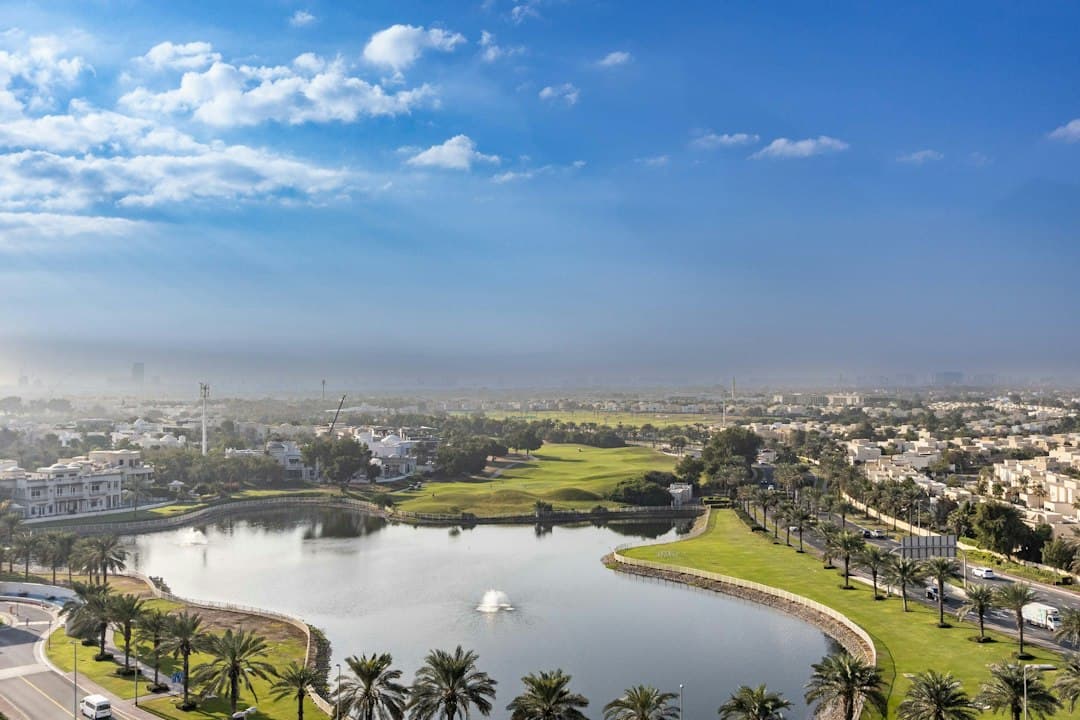
Dubai Hills Estate is worth the commute for young professionals whose workplace sits along the Al Khail Road, Sheikh Mohammed bin Zayed Road or Downtown and Marina corridors, or who value green space and a master-planned setting over a short daily drive. There is no metro station inside the estate itself, so most residents rely on driving, ride-hailing or buses. In off-peak traffic, Downtown Dubai is typically a 20 to 35 minute drive and Dubai Marina 25 to 40 minutes, with peak-hour journeys taking considerably longer. Check live travel times for your own schedule before deciding.
Where Dubai Hills Estate Sits in the City
Dubai Hills Estate is a freehold, Emaar-developed community on the western side of the city's inland growth corridor. It was planned as a mixed-use district, combining residential clusters with a golf course, a large central park, retail and schools. That planning shapes both its location and its commute, because the estate is designed to be a self-contained neighbourhood rather than a transit-first district.
For young professionals, the practical question is less about distance on a map and more about where your job is. Someone working in Business Bay, Downtown or the Dubai Internet City and Media City area may find a reasonable daily drive. Someone working in Deira or Dubai Creek Harbour will often face a longer journey, especially at rush hour. For a broader view of the estate's layout and amenities, the Dubai Hills Estate Community Guide covers the golf club, mall, park and masterplan in more detail.
How Connected Is Dubai Hills Estate?
Dubai Hills Estate connectivity depends mainly on road access. The estate is positioned to reach major arterial routes, including Al Khail Road and Sheikh Mohammed bin Zayed Road, which link to Downtown, Dubai Marina and the wider highway network. Internal roads within the estate are wide and generally calm, which makes the first few kilometres of any journey easier than in older, denser districts.
Driving routes
Most residents who commute daily drive their own car. The main advantage is flexibility: you can leave at off-peak times, choose between arterial roads, and avoid waiting for fixed transit schedules. The main disadvantage is that rush-hour congestion on the highways can add substantial time, so a journey that looks short on a map may take much longer on a weekday morning.
Public transport and ride-hailing
Public transport options are more limited than in metro-served districts. Bus routes and ride-hailing services fill much of the gap, and Dubai's transport network continues to evolve. Because routes and stops can change, confirm current bus and metro options with the Roads and Transport Authority before relying on them for a daily commute. Many young professionals who do not own a car use a combination of ride-hailing for the first leg and public transport for the rest.
The Commute Reality for Young Professionals
The right answer depends on your daily route. A commute that feels reasonable for one person can feel exhausting for another, particularly if the journey runs through the busiest highway junctions at 8am. Thinking through a few typical scenarios helps you judge the trade-off honestly.
- Works in Downtown or Business Bay: Usually a manageable drive, often within the 20 to 35 minute off-peak range, and a good fit for those who can leave early or work flexible hours.
- Works in D